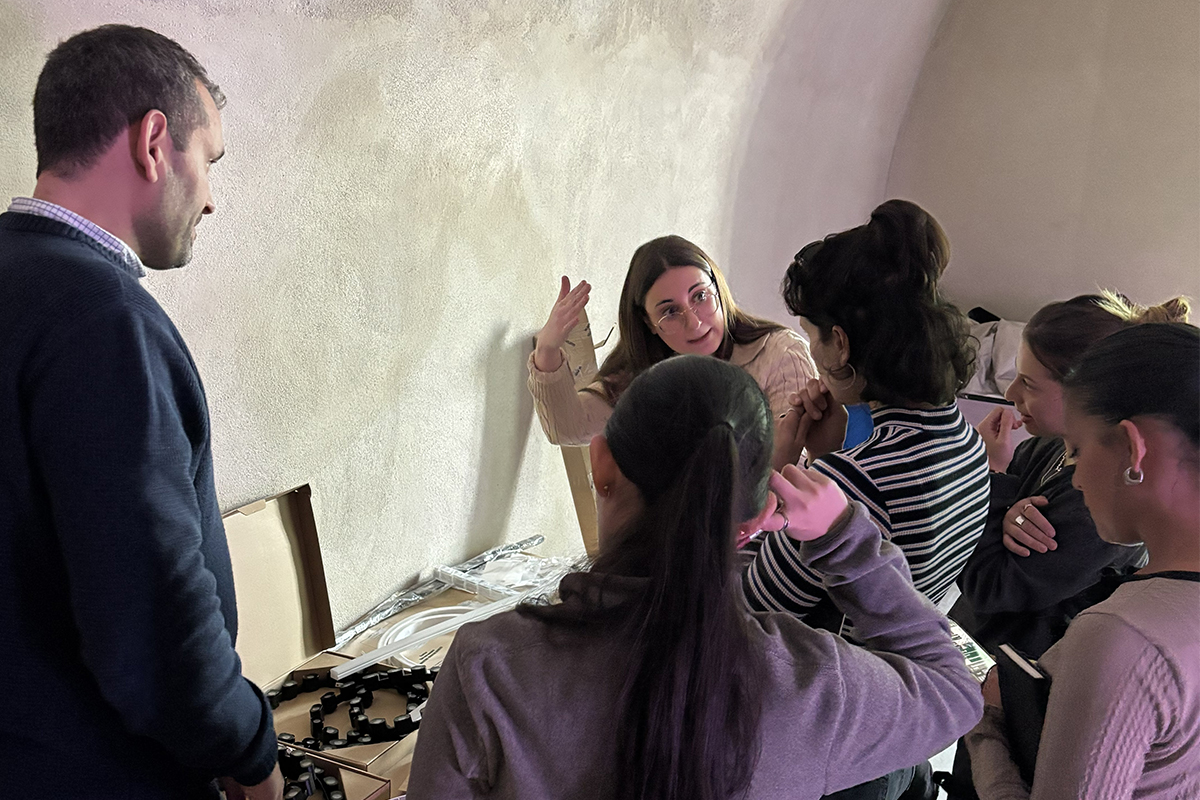



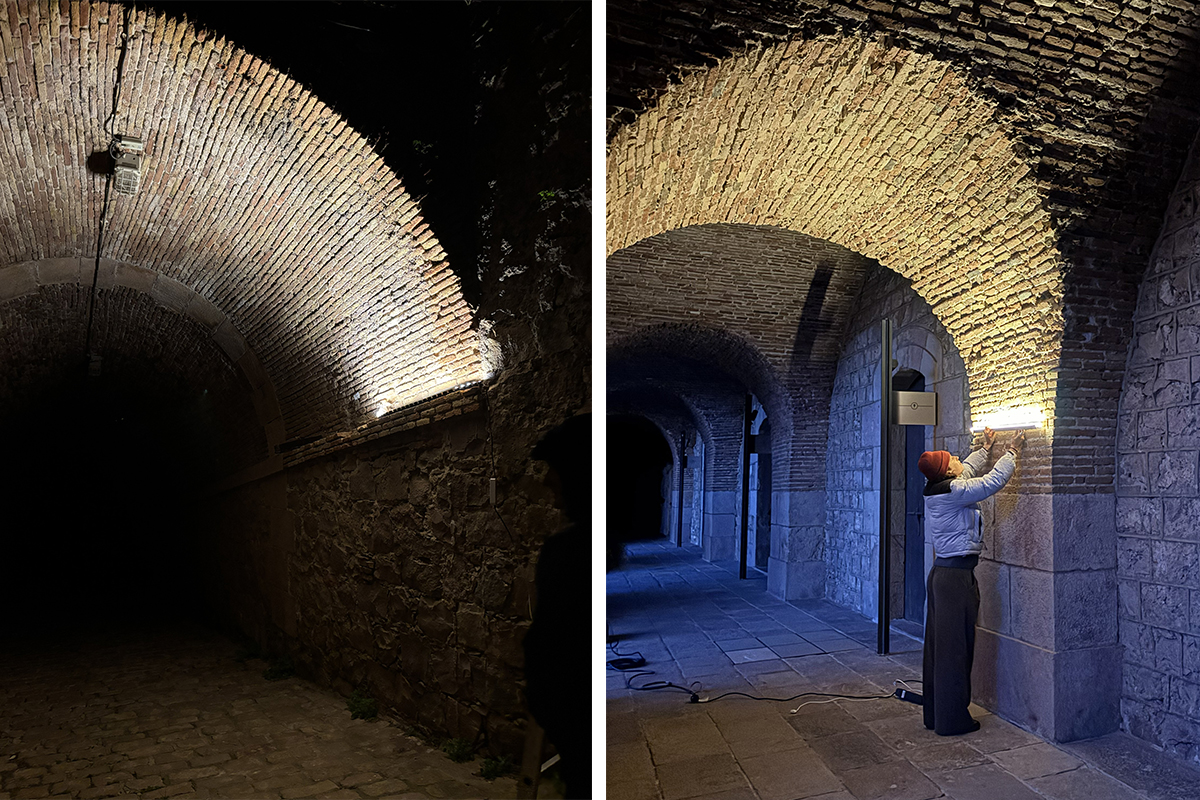
Montjuïc Castle became the stage for an academic and professional exercise where light engaged in a dialogue with historical matter in an outdoor setting. The workshop, part of the Master in Lighting Design: Architectural Lighting Design at the UPC School and conducted in collaboration with Lluria, explored how to intervene in a heritage context through respect, technical precision, and a rigorous reading of the architecture.
Revealing the Matter
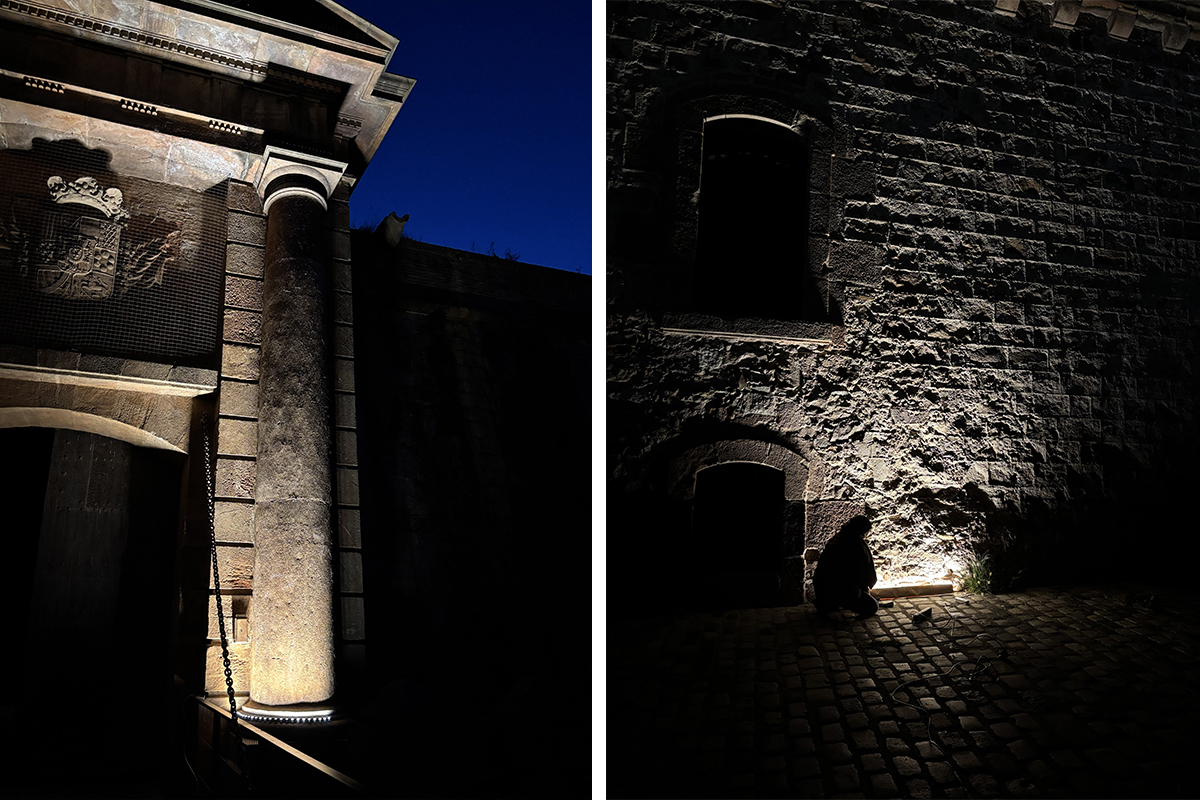
The castle’s ramparts, brick vaults, and stone walls offer irregular, curved surfaces rich in texture. Through various outdoor lighting solutions, students experimented with how well-directed light can highlight reliefs, soften shadows, or reinforce the presence of an architectural volume. The interventions incorporated several IP67 wall washers adapted to the formal diversity of the complex. For curved volumes and brick vaults, the Endhor model ensured uniform and controlled lighting. In irregular intersections and changes of plane, Blov guaranteed luminous continuity over complex surfaces. Thanks to its elliptical optics, Tatun provided precision in the reading of textures and reliefs, directing the flux with greater accuracy and controlling glare.
Integration and Transit
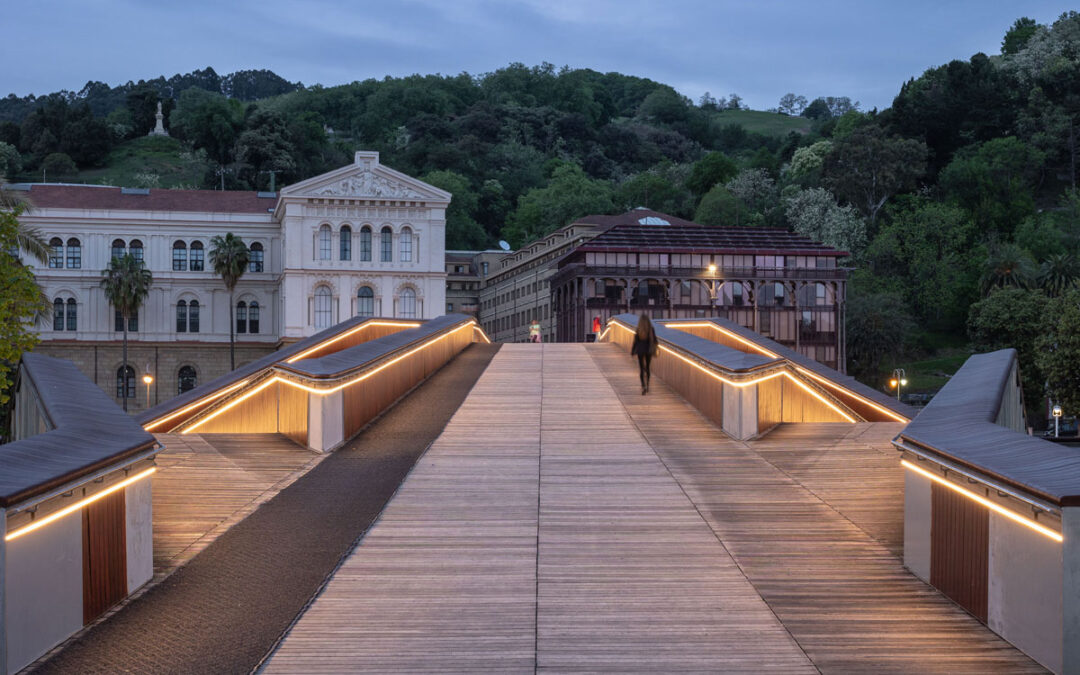
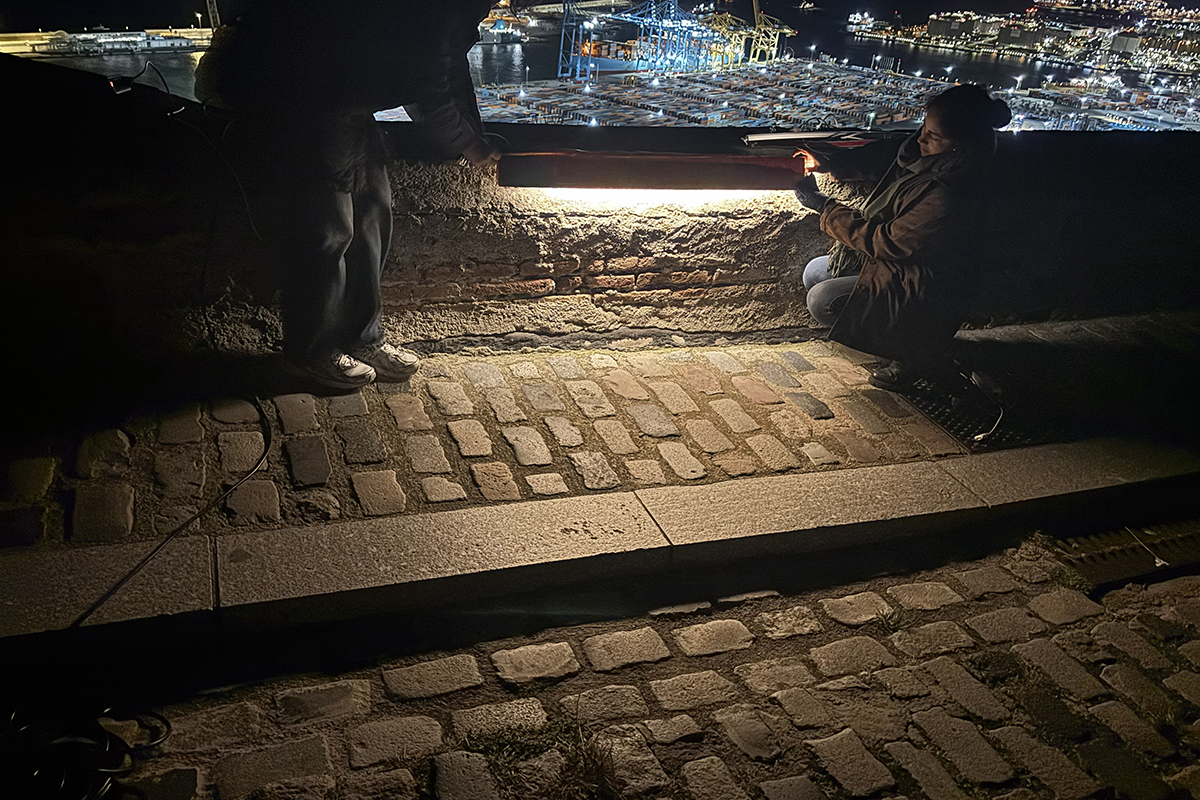
One of the key aspects was the treatment of pathways. In an environment like Montjuïc Castle, lighting serves not only an aesthetic function but also a practical one: guiding the visitor through their experience. In transit areas, ST31 and ST32 walkable profiles with IP67 sealing were used, integrated into pavements, low walls, and access zones. These systems structure routes through a continuous line of light protected against the elements. The luminaire adapts to the construction plane to allow the light, orientation, and safety to take center stage, demonstrating how technique can coexist in balance with heritage spaces.
Formal Flexibility
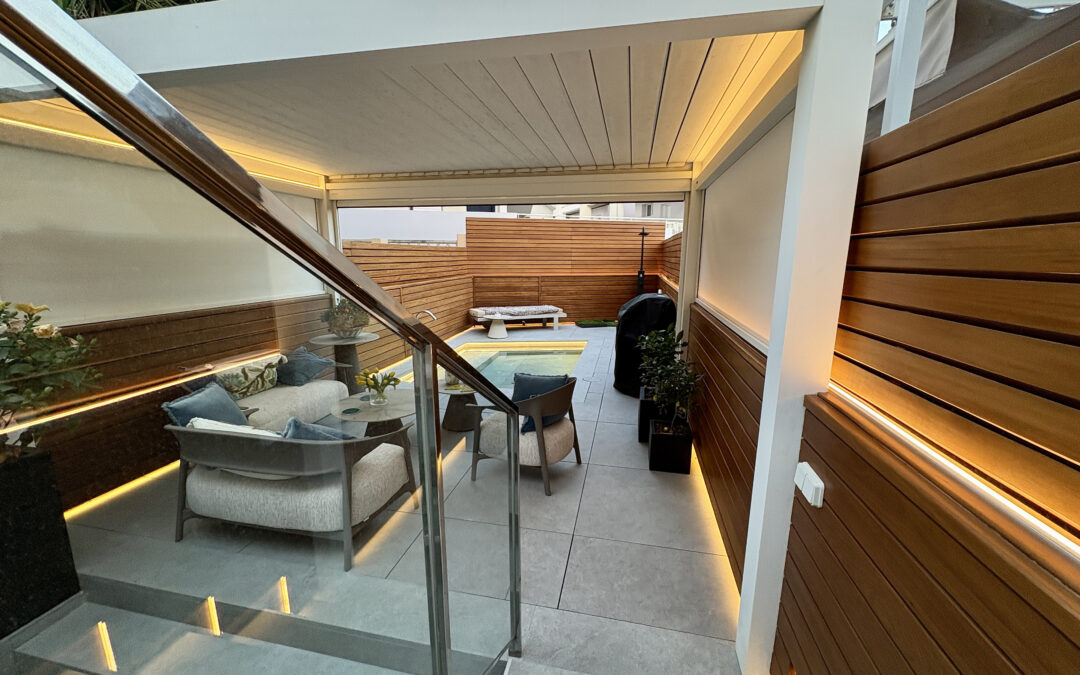
Neon Flex IP65 was proposed as a resource capable of adapting to horizontal and vertical geometries, following paths and underlining elements without fragmenting spatial perception. In an architecture where routes break away and surfaces escape orthogonality, flexible light becomes a design tool that organizes, delimits, and adds visual depth.
Learning in a Real-World Context
Beyond the application of technical solutions, the workshop allowed students to work with the real demands of an outdoor lighting project: water-tightness, durability, maintenance, and constructive integration. The experience highlighted the wide range of resources that Lluria offers for outdoor interventions and, above all, the importance of design criteria in their application. The Master in Lighting Design at the UPC School and Lluria thus converge in an exercise where technique and sensitivity align to train future professionals capable of intervening with rigor in complex historical outdoor contexts.